STORY OF ATHURA AND
THE HELLAS
Athura is aramaic word of Assyria
Assyria is an english word
Hellas was the hellenized word of the greeks
greeks is an english word
//////////////////////////////////////////////////////////
Babylon is the capital city of Athura.
HISTORY OF BABYLON....
The rivers Euphrates and tigris 1,500 miles flow through a wide valley known as Mesopotamia meaning between two rivers . the southern lands was known as Agade or Akkad
whose capital city was Babylon the lands of Agade Athura and Babylon was known to the bible in aramaic language as SHINAR.
The northern lands was called Athura or in english known as Assyria
When the flood ended on 2238 BC . Then the descendants of Cain filled the lands followed by the people Samsi Iluna known as Shem and by the people of Hammurabi known as Ham
The son of Ham known as Nimrod began the construction of the Tower of Babel on 2256 BC
Then God stopped the construction
After this they were dispersed to the lands of Egypt, Phoenix, Hellas and as fAR AS THE LANDS KNOWN AS HYPERBOREAS north of the lands of Mt. Ararat the Himalayas mountains and as far as India
The.... CUSH became the king of the city of Kish
Then... the son of Shem known as Asshur rebelled against the rule of Nimrod Asshur and his brother Arphaxad pushed Nimrod to Egypt and Nimrod became the king of Egypt known asAthotis
After this... the descendants of Arphaxad and Asshur dominated the lands of Athura (Gen.10:11) from then on... the lands was called the land of Asshur... thus the country was called ASSYRIA
Nimrod joined his father in reigning the kingdom of Egypt from 2194-2192 BC. Then Cush died leaving Nimrod to reign from 2192 = 2167 BC
In 2167 BC Sammur raut the queen of Cush stayed in Athura leaving Egypt without a king or queen . Later she returned to Egypt with her young son Horus known also as Gilgamesh
Horus became a pharaoh of Egypt from 2125 BC and he reigned for 31 years
Then Horus led a group of people to settle in Hellas he left his mother Sammurraut to manage the kingdom of Egypt
Sammur raut was also known as Ishtar
gilgamesh
also called as Nimrod of the bible an Horus Pharaoh of Egypt
gilgamesh

gilgamesh

Athura empire map
//////////////////////////////////////////////////////////////////////
(Genesis 10:2-5)
Japheth's sons were named Gomer, Magog, Madai, Javan, Tubal, Meshech and Tiras. Their descendants became the maritime nations in various lands, each with a separate language (Gen 10:5).

GENESIS 10
MAGOG , MESCHECHS AND TUBAL AND JAVAN
PELASGIANS
ANCIENT PEOPLE OF HELLAS
About two thousand years before the birth of Christ, in the days when Isaac wanted to go down into Egypt, Greece was inhabited by a savage race of men called the Pe-las´gi-ans. They lived in the forests, or in caves hollowed out of the mountain side, and hunted wild beasts with great clubs and stone-tipped arrows and spears. They were so rude and wild that they ate nothing but raw meat, berries, and the roots which they dug up with sharp stones or even with their hands.
For clothing, the Pelasgians used the skins of the beasts they had killed; and to protect themselves against other savages, they gathered together in families or tribes, each having a chief who led in war and in the chase.
There were other far more civilized nations in those days. Among these were the E-gyp´tians, who lived in Africa. They had long known the use of fire, had good tools, and were much further advanced than the Pelasgians. They had learned not only to build houses, but to erect the most wonderful monuments in the world,—the Pyr´a-mids, of which you have no doubt heard
In Egypt there were at that time a number of learned men. They were acquainted with many of the arts and sciences, and recorded all they knew in a peculiar writing of their own invention. Their neighbors, the Phœ-ni´-cians, whose land also bordered on the Mediterranean Sea, were quite civilized too; and as both of these nations had ships, they soon began to sail all around that great inland sea.
Egyptians hebrews and Phœnicians finally came to Greece, where they made settlements, and began to teach the Pelasgians many useful and important things.
INACCHUS was the first king of Peloponesos. He built the city of Argos
After Inachus had built Argos, another Egyptian prince came to settle in Greece. His name was Ce´crops, and, as he came to Greece after the great flood
The Pelasgians, glad to find such a wise leader, gathered around him, and they soon learned to plow the fields and to sow wheat. Under Cecrops' orders they also planted olive trees and vines, and learned how to press the oil from the olives and the wine from the grapes. Cecrops taught them how to harness their oxen; and before long the women began to spin the wool of their sheep, and to weave it into rough woolen garments, which were used for clothing, instead of the skins of wild beasts
After building several small towns in At´ti-ca, Cecrops founded a larger one, which was at first called Ce-cro´pi-a in honor of himself. This name, however, was soon changed to Ath´ens
When Cecrops died, he was followed by other princes, who continued teaching the people many useful things, such as the training and harnessing of horses, the building of carts, and the proper way of harvesting grain. Cadmus, a prince even showed them how to make beehives, and how to use the honey as an article of food.
Shortly after the building of Athens, a Phœnician colony, led by Cad´mus, settled a neighboring part of the country, called Bœ-o´tia, where they founded the city which was later known as Thebes. Cadmus also taught the people many useful things, among others the art of trade (or commerce) and that of navigation (the building and using of ships); but, best of all, he brought the alphabet to Greece, and showed the people how to express their thoughts in writing.
Almost at the same time that Cadmus fhad built the city of Thebes,
an Egyptian governor from Canaan called Dan´a-us a leader from the tribe of Dan son of Jacob. The hebrews came and settled a colony on the same spot where that of Inachus had once been. The new Argos rose on the same place as the old; and the country around it, called Ar´go-lis, was separated from Bœotia and Attica only by a long narrow strip of land, which was known as the Isthmus of Cor´-inth.

bOETHOS king of Aigyptos (egypt)

Danaus one of the hyksos of ancient Egypt was defeated by the army of bOETHOS king of Aigyptos so they wEnt to Bœ-o´tia and he was welcomed by Cadmus
Danaus not only showed the Pelasgians all the useful arts which Cadmus and Cecrops had taught, but also helped them to build ships like that in which he had come to Greece.
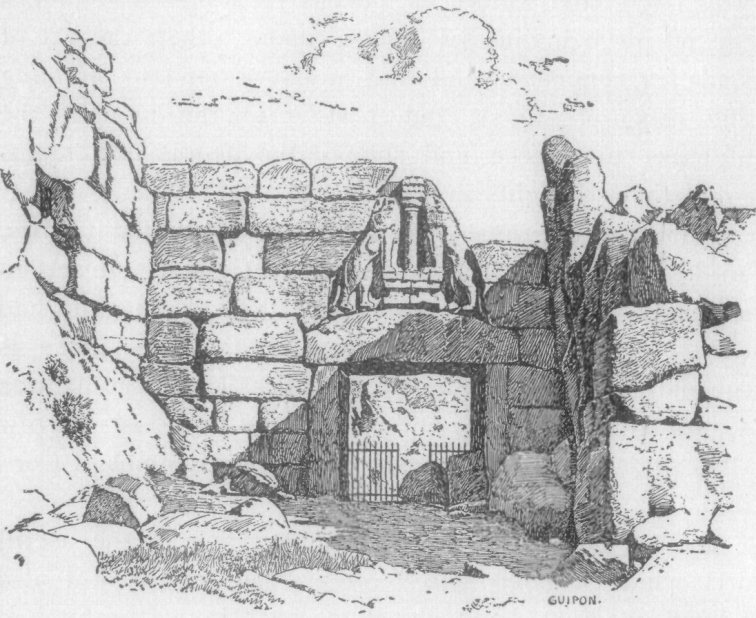
The descendants of Danaus long ruled over the land; and one member of his family, Per´seus, built the town of My-ce´næ on a spot where many of the Pelasgian stone walls can still be seen.
The Pelasgians who joined this young hero helped him to build great walls all around his town. These were provided with massive gateways and tall towers, from which the soldiers could overlook the whole country
DEUCALION, the early king of Thesaly told the people of the great flood . That Deucalion and his wife Pyr´rha were the only people left alive after the flood. When the waters had all gone, they went down the mountains of Dacia,
Deucallion had a son called Hellen The country was soon peopled by the children of these men, who always , and that they sprang from the race which owed its birth to this great miracle. Deucalion reigned over this people as long as he lived; and when he died, his two sons, Am-phic´ty-on and Hel´len, became king and the country was called Hellas
Dacians the people of
Deucalion and his wife Pyr´rha came over the mountains and drive some Hellasle away, do Hellen called the chiefs of all the different cities and towns to a council, to ask their advice about the best means of defense.All the chiefs obeyed the summons, and met at a place in Thessaly where the mountains approach the sea so closely as to leave but a narrow pass between. In the pass are hot springs, and so it was called Ther-mop´y-læ,
war between the dacians and the hellas


/////////////////////////////////////////////////////////////
THE KINGDOM OF ASSYRIA The culture of Athura in the ancient Sumer was of the Late Stone Age, regarded as an age of barbarism. while in Egypt the pre-Dynastic prople were eloquent and of artistic and mechanical skill, and have mathematical ability
In Egypt and Babylonia the soil was tilled and its fertility increased by irrigation. Wherever man waged a struggle with Nature he made rapid progress, and the earliest great civilizations were rooted in the little fields of the Neolithic farmers. Their mode of life necessitated a knowledge of Nature's laws; they had to take note of the seasons and measure time. So Egypt gave us the Calendar, and Babylonia the system of dividing the week into seven days, and the day into twelve double hours.
 The agricultural life permitted large communities to live in river valleys, and these had to be governed by codes of laws; settled communities required peace and order for their progress and prosperity.
 Law and religion were closely associated, and the organization and division of labour the influence of religious teachers was pre-eminent. Early rulers, indeed, were priest-kings -- who owned the land and measured out the span of human life.
Neolithic civilization led an idyllic existence; triumphs were achieved by slow and gradual steps; legal codes were, , written in blood and institutions welded in the fires of adversity. But, disciplined by laws, which fostered humanitarian ideals, Neolithic man, , had reached a comparatively high state of civilization long ages before the earliest traces of his activities can be obtained. When this type of mankind is portrayed in Ancient Sumeria, Ancient Egypt, and Ancient Crete we find that the faces are refined and intellectual and often quite modern in aspect.
Babylonia is a treeless country, and timber had to be imported from the earliest times. The date palm was probably introduced by man, as were certainly the vine and the fig tree, which were widely cultivated, especially in the north. Stone, suitable for building, was very scarce, and limestone, alabaster, marble, and basalt had to be taken from northern Mesopotamia, where the mountains also yield copper and lead and iron. Except Eridu, where ancient workers quarried sandstone from its sea-shaped ridge, all the cities were built of brick, an excellent clay being found in abundance. When brick walls were cemented with bitumen they were given great stability. This resinous substance is found in the north and south. It bubbles up through crevices of rocks on river banks and forms small ponds.
Sumeria had many surplus products, including corn and figs, pottery, fine wool and woven garments, to offer in exchange for what it most required from other countries. It must, therefore, have had a brisk and flourishing foreign trade at an exceedingly remote period. No doubt numerous alien merchants were attracted to its cities, and it may be that they induced or encouraged Semitic and other raiders to overthrow governments and form military aristocracies, so that they themselves might obtain necessary concessions and achieve a degree of political ascendancy. It does not follow, however, that the peasant class was greatly affected by periodic revolutions of this kind, which brought little more to them than a change of rulers. The needs of the country necessitated the continuance of agricultural methods and the rigid observance of existing land laws; indeed, these constituted the basis of Sumerian prosperity. Conquerors have ever sought reward not merely in spoil, but also the services of the conquered. In northern Babylonia the invaders apparently found it necessary to conciliate and secure the continued allegiance of the tillers of the soil. Law and religion being closely associated, they had to adapt their gods to suit the requirements of existing social and political organizations. A deity of pastoral nomads had to receive attributes which would give him an agricultural significance; one of rural character had to be changed to respond to the various calls of city life.
The petty kingdoms around yje city of Babtlon appear to have been tribal in origin. Each city was presided over by a deity who was the nominal owner of the surrounding arable land, farms were rented or purchased from the priesthood, and pasture was held in common.
Moon worship appears to have been as ancient as water worship, with which, as we have seen, it was closely associated. It was widely prevalent throughout Babylonia. The chief seat of the lunar deity, Sin, which Abraham migrated to Harran, Ur was situated in Sumer, in the south, between the west bank of the Euphrates
Sin is believed to be a corruption of "Zu-ena", which signifies "knowledge lord" Like the lunar Osiris of Egypt, the moon measured time and controlled the seasons; seeds were sown at a certain phase of the moon, and crops were ripened by the harvest moon.

the story ANCIENT GREECE knoWn as Hellas
LUDS WAS PART OF THE HELLAS

Many years passed away, during which time the long and wearisome siege of Troy had come to an end, and Agamemnon had returned home to meet death at the hands of his wife and Aegisthus. But his daughter, Iphigenia, was still an exile from her native country, and continued to perform the terrible duties which her office involved. She had long given up all hopes of ever being restored to her friends, when one day two Greek strangers landed on Taurica's inhospitable shores. These were Orestes and Pylades, whose romantic attachment to each other has made their names synonymous for devoted self-sacrificing friendship. Orestes was Iphigenia's brother, and Pylades her cousin, and their object in undertaking an expedition fraught with so much peril, was to obtain the statue of the Taurian Artemis. Orestes, having incurred the anger of the Furies for avenging the murder of his father Agamemnon, was pursued by them wherever he went, until at last he was informed by the oracle of Delphi that, in order to pacify them, he must convey the image of the Taurian Artemis from Tauris to Attica. This he at once resolved to do, and accompanied by his faithful friend Pylades, who insisted on sharing the dangers of the undertaking, he set out for Taurica. But the unfortunate youths had hardly stepped on shore before they were seized by the natives, who, as usual, conveyed them for sacrifice to the temple of Artemis. Iphigenia, discovering that they were Greeks, though unaware of their near relationship to herself, thought the [96]opportunity a favourable one for sending tidings of her existence to her native country, and, accordingly, requested one of the strangers to be the bearer of a letter from her to her family. A magnanimous dispute now arose between the friends, and each besought the other to accept the precious privilege of life and freedom. Pylades, at length overcome by the urgent entreaties of Orestes, agreed to be the bearer of the missive, but on looking more closely at the superscription, he observed, to his intense surprise, that it was addressed to Orestes. Hereupon an explanation followed; the brother and sister recognized each other, amid joyful tears and loving embraces, and assisted by her friends and kinsmen, Iphigenia escaped with them from a country where she had spent so many unhappy days, and witnessed so many scenes of horror and anguish.
The fugitives, having contrived to obtain the image of the Taurian Artemis, carried it with them to Brauron in Attica.

 THE FALL OF TROY
The final fall of Troy in 677 occurred at the close of the reign of Thuoris (694-677) of Egypt. The year 677 marked the rise of Media
ten-year siege of the city. A Greek victory had once before occurred -- about 504 years before, in 1181. Another war, ending in 1149
KINGS OF THE LUDS:
Gyges 716-678 , FIRST KING
Ardys 678-629
Sadyattes 629-617
Alyattes 617-560
Croesus 560-546
THE STORY OF THE LUDS :
Prior to the Mermnadae, another line of kings governed Lydia -- the Heraclidae
The history of the kingdom of Lydia, settled heavily by the children of Lud, son of Shem
Trojan War.and the contemporary kings of Argos and Mycenae.
history of Greece commences later than the Tower of Babel. The starting point was the city-state Corinth whose areas were controlled by the hittites and Egypt
The kings of Corinth ruled for 323 years. They were followed by a constitutional oligarchy for 90 years.....
Kings of Corinth | Lengths of Reign | Dates |
| Aletes |
35
| 1069-1034 |
| Ixion |
37
| 1034- 997 |
| Agelaus |
37
| 997- 960 |
| Prymnus |
34
| 960- 926 |
(or 35)
| (960- 925) | |
| Bacchis |
36
| 926- 890 |
(or 35)
| (925- 890) | |
| Agelas |
30
| 890- 860 |
| Eudemus |
25
| 860- 835 |
| Aristomedes |
35
| 835- 800 |
| Agemon |
16
| 800- 784 |
| Alexander |
25
| 784- 759 |
| Telestes |
12
| 759- 747 |
| Automenes |
1
| 747- 746 |
| The Constitution |
90
| 746- 656 |
| The Tyranny |
73 1/2
| 656- 583 |
The History of Athens
Kings of Athens | Lengths of Reign | Dates |
| Cecrops |
50
| 1556-1506 |
| Cranaus |
9
| 1506-1497 |
| Amphictyon |
10
| 1497-1487 |
| Erecthonius |
50
| 1487-1437 |
| Pandion I |
40
| 1437-1397 |
| Erechtheus |
50
| 1397-1347 |
| Cecrops II |
40
| 1347-1307 |
| Pandion II |
25
| 1307-1282 |
| Aegaeus |
48
| 1282-1234 |
| Theseus |
30
| 1234-1204 |
| Menestheus |
23
| 1204-1181 |
Athens was not the oldest city in Greece. That honor goes to Sicyon, a city located near Corinth.

The ancient city-state of Sicyon lasted 1000 years,
Sicyon dominion for only 962 years the time of the re-establishment of the Heraclidae at Sparta, 80 years after the fall of Troy in the Trojan War.
The original name of Sicyon was Aegialea. This Greek name was derived from the city's first king, Aegialeus.
The name Aegialeus in Greek means "man of the coastland" or "shoreland" Eber, or Heber, from which the word Hebrew is derived. One of the root meanings of Eber is "shoreland" or "shoreregion In other words, Hebrews were among the settlers of ancient Greece.
Elisha, son of Javan, also settled the Greek coastlands. From him the name Hellas came to be applied to Greece.

Early influence of Hebrew people in the Grecian land is also recorded throughout Greek history. the incursions of the Hyksos -- the Edomite Heraclidae the PHILISTINES OF THE BIBLE,, THEIR HERO WAS GOLIATH KILLED BY DAVID...
The Greeks knew of the God of Shem because the Hebrews, a Semitic people, dwelt among them. Two thousand years in advance God was preparing the Greek people for the preservation of His Word.


During the first few years of his reign, Rameses III consolidated the work of his father, Setnakhte, by bringing unity to the country. Therefore, in his fifth year when the Libyans attacked, Egypt was well prepared. It had been twenty-seven years since Merenptah had repulsed their last offensive, now again, an organized and efficient Egyptian army easily defeated them.
But this was nothing compared to the second and much greater threat, which came three years later. The pILESET lnpwn as philistines Sea Peoples were on the move. They had, by now, desolated much of the Late Bronze Age civilizations and were ready to make a move on Egypt. A vast horde was marching south with a huge fleet at sea supporting the progress on land.

Rameses III thrashing the Sea PeoplesTo counter this threat Rameses acted quickly. He established a defensive line in Southern Palestine and requisitioned every available ship to secure the mouth of the Nile. Dispatches were sent to frontier posts with orders to stand firm until the main army could be brought into action
The clash, when it came was a complete success for the Egyptians. The Sea Peoples, on land, were defeated and scattered but their navy continued towards the eastern Nile delta. Their aim now, was to defeat the Egyptian navy and force an entry up the river. Although the Egyptians had a reputation as poor seamen they fought with the tenacity of those defending their homes. Rameses had lined the shores with ranks of archers who kept up continuous volleys of arrows into the enemy ships when they attempted to land. Then the Egyptian navy attacked using grappling hooks to haul in the enemy ships. In the brutal hand to hand fighting which ensued the Sea People are utterly defeated.
The power of the Sea Peoples was broken in the Nile delta but some, the biblical Philistines, settled in Palestine. With the exception of one more conflict with the Libyans, the rest of Rameses III’s long reign was peaceful. Trading contacts were revived with the Land of Punt, law and order was reestablished throughout the country.


Philistia
The Philistines were Cretans who were a part of the "Sea Peoples" invasion of Egypt circa 1100 B.C. After Rameses III defeated them, he allowed them to settle in Canaan. They settled in the southern coastal plain of Canaan, but within 150 years after their settlement, they would conquer much of the region.
Before that; Cretans - along with Egyptians - built the first modern city in Greece, called Mycenae, which evolved into the Mycenaean civilization. The connection between Mycenaean culture and Philistine culture was made clearer by finds at the excavation of Ashdod, Ekron, Ashkelon, and more recently Gath, four of the five Philistine cities in Canaan. The fifth city is Gaza. Especially notable is the early Philistine pottery, a locally made version of the Aegean Mycenaean Late Helladic IIIC pottery, which is decorated in shades of brown and black. This later developed into the distinctive Philistine pottery of the Iron Age I, with black and red decorations on white slip known as Philistine Bichrome ware.

STORY OF
Philistines and the HEBREWS AT WAR
Israel is fighting the Philistines. there were fights with other nations, too—The Philistines were an ancient GREEK people, listed in the records of those who descended from Noah’s son Ham after the time of the flood (Genesis 10:14). Abraham and Isaac interacted with the Philistines in Canaan (Genesis 21:33–34). But it was during the time of the Exodus that the Lord promised that the land of Israel would include the territory of the Philistines (Exodus 23:31); this promise meant that some kind of conflict would have to take place for Israel to displace the Philistines.
When Joshua was old, he mentioned the land of the Philistines as one of the areas that still remained to be defeated by Israel (Joshua 13:1–3). Because the Philistines were not completely removed, Israel faced them as perennial enemies.
During the time of the judges in Israel, the Philistines were often a thorn in Israel’s side. Jephthah, Shamgar, and Samson all fought against Philistia. The battles between Israel and the Philistines continued in the days of Eli and later erupted in the conflict between David and Goliath, a battle fought within a larger Israel-Philistine conflict (1 Samuel 17). David defeated Goliath, initiating a great victory for Israel, yet the history of Israel and the Philistines was not done.
During Solomon’s reign in Israel, the Philistines were subdued, yet the later prophets note that the Philistines continued to war against Israel. The Philistines were devastated by the same Assyrian Kingdom that overtook Israel (2 Kings 18:33–35). Philistia was not completely destroyed until the time of the Babylonian and Persian Empires.
From the first Hebrew, Abraham, until the deportation of Judah to Babylon, the Philistines were a constant enemy of Israel. The conflict was over more than land; it involved divergent worldviews. Unlike the Israelites, the Philistines served human-made deities and were known as a violent, warlike people.
Seven major battles between Israel and Philistines are recorded in the Old Testament. They include the Battle of Shephelah (2 Chronicles 28), the Battle of Aphek (1 Samuel 4), the Battle of Eben-Ezez (1 Samuel 7:13–14), the battles at Michmash (1 Samuel 14), the battle involving David and Goliath (1 Samuel 17), the battle at Mount Gilboa (1 Samuel 31), and Hezekiah’s defeat of the Philistines (2 Kings 18:5–8).
The Philistines’ eventual defeat was not due to Israel’s strength or military prowess. As Psalm 44:3 says, “It was not by their sword that they won the land, nor did their arm bring them victory; it was your right hand, your arm, and the light of your face, for you loved them.”
Gaza, Ashdod and the other Philistine kingdoms
Philistia comprised the southern coast of modern Israel. In the 8th century BC it was organised in several independent kingdoms, centred around four cities: Gaza, Ashkelon, Ashdod and Ekron. The region acted as aga buffer zone between the expanding might of the empires of Assyria and Kush and frequently provided a stage for their relationship to play out, in hostile and peaceful ways.
During the reign of Tiglath-pileser III (744-727 BC) the city of Gaza was ruled by Hanunu. In 734 BC, faced with the advancing Assyrian army, Hanunu fled to neighbouring Egypt, control over which was then split between a number of dynasts in the Delta and the kingdom of Kush in the south. Historically and economically, Gaza and the Nile Delta enjoyed a close relationship and we can safely assume that Hanunu was seeking protection against Tiglath-pileser. However, no help was forthcoming and Hanunu eventually returned to his city.
The Assyrian king reinstated Hanunu on the throne of Gaza. However, the city was turned into an Assyrian dependency, more specifically a trading station (bīt kāri), no doubt set up to take advantage of its ideal location at the nexus of the converging trade routes from Egypt and Arabia. Tiglath-pileser commemorated this event, which cemented the Assyrian presence on Egypt's border, by setting up a stele at the Brook of Egypt (Nahal Muṣur, modern Nahal Besor), a wadi south of Gaza. The stele has not been found but we know of it from Tiglath-pileser's inscriptions at his royal palace at Kalhu
Hanunu of Gaza falls foul of Sargon II
Hanunu's rule outlasted that of Tiglath-pileser and Shalmaneser V (726-722 BC), but events early in the reign of Sargon II (721-705 BC) led to his downfall. In 721 BC, perhaps still smarting from Tiglath-pileser's humiliation of Gaza, Hanunu took advantage of the political instability which accompanied Sargon's accession and joined the anti-Assyrian coalition led by Yau-bi'di of Hamat PGP (modern Hama) in central Syria. The coalition had no success in breaking free from Assyria's control: after smashing the Hamat-led forces at the city of Qarqar, Sargon marched south against Hanunu of Gaza and his allies, among them troops dispatched by an Egyptian ruler. His name is lost in the Assyrian accounts of these events but he is thought to have been Tefnakhte, king of Saïs in the western Delta. The Assyrian army met the allied forces at Rapihu (modern Raphia), just south of Gaza, and defeated them.
Sargon's treatment of Hanunu was far less lenient than Tiglath-pileser's had been, no doubt because this time the king of Gaza had not just avoided an encounter by taking flight but had engaged in open rebellion. Nevertheless, Gaza and Hanunu appear to have got off relatively lightly. While Sargon boasts of his punitive measures against Qarqar, the flaying of Yau-bi'di and the killing of co-conspirators, Hanunu is said to have been deported to Assyria and no more is mentioned about his fate. It is possible that he was brought to the Assyrian heartland in order to take part in a ritual victory celebration or in order to publicly swear loyalty to Sargon, an elaborate affair whose theatrical elements are particularly well illustrated in surviving loyalty treaties from the 7th century BC
Gaza itself was not annexed as an Assyrian province but maintained its nominal independence as a vassal state of the empire. On the one hand, this reflects the region's strategic importance for trade with Egypt and Arabia, and Sargon's reluctance to antagonise the city and especially its trade partners. On the other hand, Gaza had an important role to play as a buffer state against the powers in Egypt and the Arab tribes. In 716 BC, Sargon reinforced Assyria's presence in the sensitive border region by settling deportees "on the border of the City of the Brook of Egypt" and appointing the sheikh of the Laban tribe to rule over them, establishing what amounted de facto to an Assyrian military outpost in the area.
Ashdod between Assyria and Kush
Almost a decade after Sargon's defeat of Hanunu, events in another Philistine city, Ashdod, acted as a catalyst in international politics and led to an unprecedented interaction between Assyria and Kush, now in control of a largely united Egypt (see Kush). The episode probably dates to 711 BC and is described in detail in Sargon's so-called Great Summary Inscription, found in his capital city of Dur-Šarruken. The inscription records that Azuri, king of Ashdod, refused to pay tribute to Assyria, in direct contravention of his duty as a vassal king, and moreover plotted against Assyria with neighbouring rulers. As a result, the Assyrian king had the insubordinate Azuri replaced with his more compliant brother Ahi-miti. In this, Sargon followed Assyria's usual practice of supporting a sympathetic but legitimate claimant to the throne of a vassal kingdom. But this interference in their affairs was not well received by the inhabitants of Ashdod who overthrew Ahi-miti almost immediately after his appointment in favour of one Yamani, a man with no claim to the throne but certainly a leading role among the insurgents.
Yamani attempted to form an anti-Assyrian coalition, approaching other Philistine cities as well as the rulers of Judah, Moab and Edom. He also repeatedly contacted the Delta ruler Bakenranef of Saïs, Tefnakhte's successor, but his appeals went unanswered. When Sargon marched on Ashdod in retaliation, Yamani wasted no time and, in a scene reminiscent of Hanunu's flight from Gaza before the advancing Tiglath-pileser III, he too fled to territory outside Assyria's reach, into the Kushite sphere of influence. Sargon invaded Ashdod and ended its independence, turning it into an Assyrian province and the new southwestern boundary of the empire. Excavations in Ashdod, under Moshe Dothan, have brought to light evidence of these events: 3,000 skeletons, buried in a mass grave, are thought to be victims of the Assyrian conquests while three fragments of the basalt stele which Sargon had erected at Ashdod in celebration of his victory were recovered in the acropolis of the city.
he friendly relations between Assyria and Kush were not to last, however. Ashdod broke free of Assyrian supremacy as soon as Sargon died in 705 BC and it is thought that this is when Sargon's stele at Ashdod was smashed. Its new ruler Mitinti formed another coalition against Assyria, now under the rule of Sargon's successor Sennacherib (704-681 BC). Together with two other Philistine kings, Ṣidqa of Ashkelon and Padi of Ekron, he entered into an alliance with the neighbouring rulers of the Phoenician city-states of Judah, Ammon, Moab and Edom, and this time they received ample military support from Shebitku's Kushite and Egyptian troops. What prompted the drastic change in Kushite foreign policy towards Assyria is unclear in detail, but the relations between the two empires never recovered after Kush's involvement in the resulting battle of Eltekeh in 701 BC.
While Ashkelon, Ekron and Ashdod fou
historical background
ASIATIC EMPIRE OF EGYPT
ASIATIC EMPIRE OF EGYPT
During the long interval since the fall of the First Babylonian Dynasty,
however, Western Asia had not been left masterless. Three other imperial
powers had waxed and waned in her borders, of which one was destined to
a second expansion later on. The earliest of these to appear on the
scene established an imperial dominion of a kind which we shall not
observe again till Asia falls to the Greeks; for it was established in
Asia by a non-Asiatic power. In the earlier years of the fifteenth
century a Pharaoh of the strong Eighteenth Dynasty, Thothmes III, having
overrun almost all Syria up to Carchemish on the Euphrates, established
in the southern part of that country an imperial organization which
converted his conquests for a time into provincial dependencies of
Egypt. Of the fact we have full evidence in the archives of Thothmes’
dynastic successors, found by Flinders Petrie at Amarna; for they
include many reports from officials and client princes in Palestine and
Phoenicia.
If, however, the word empire is to be applied (as in fact we have
applied it in respect of early Babylonia) to a sphere of habitual
raiding, where the exclusive right of one power to plunder is
acknowledged implicitly or explicitly by the raided and by surrounding
peoples, this "Empire" of Egypt must both be set back nearly a hundred
years before Thothmes III and also be credited with wider limits than
those of south Syria. Invasions of Semitic Syria right up to the
Euphrates were first conducted by Pharaohs in the early part of the
sixteenth century as a sequel to the collapse of the power of the
Semitic "Hyksos" in Egypt. They were wars partly of revenge, partly of
natural Egyptian expansion into a neighbouring fertile territory, which
at last lay open, and was claimed by no other imperial power, while the
weak Kassites ruled Babylon, and the independence of Assyria was in
embryo. But the earlier Egyptian armies seem to have gone forth to Syria
simply to ravage and levy blackmail. They avoided all fenced places, and
returned to the Nile leaving no one to hold the ravaged territory. No
Pharaoh before the successor of Queen Hatshepsut made Palestine and
Phoenicia his own. It was Thothmes III who first reduced such
strongholds as Megiddo, and occupied the Syrian towns up to Arvad on the
shore and almost to Kadesh inland--he who by means of a few forts,
garrisoned perhaps by Egyptian or Nubian troops and certainly in some
instances by mercenaries drawn from Mediterranean islands and coasts, so
kept the fear of himself in the minds of native chiefs that they paid
regular tribute to his collectors and enforced the peace of Egypt on all
and sundry Hebrews and Amorites who might try to raid from east or
north.
scene established an imperial dominion of a kind which we shall not
observe again till Asia falls to the Greeks; for it was established in
Asia by a non-Asiatic power. In the earlier years of the fifteenth
century a Pharaoh of the strong Eighteenth Dynasty, Thothmes III, having
overrun almost all Syria up to Carchemish on the Euphrates, established
in the southern part of that country an imperial organization which
converted his conquests for a time into provincial dependencies of
Egypt. Of the fact we have full evidence in the archives of Thothmes’
dynastic successors, found by Flinders Petrie at Amarna; for they
include many reports from officials and client princes in Palestine and
Phoenicia.
If, however, the word empire is to be applied (as in fact we have
applied it in respect of early Babylonia) to a sphere of habitual
raiding, where the exclusive right of one power to plunder is
acknowledged implicitly or explicitly by the raided and by surrounding
peoples, this "Empire" of Egypt must both be set back nearly a hundred
years before Thothmes III and also be credited with wider limits than
those of south Syria. Invasions of Semitic Syria right up to the
Euphrates were first conducted by Pharaohs in the early part of the
sixteenth century as a sequel to the collapse of the power of the
Semitic "Hyksos" in Egypt. They were wars partly of revenge, partly of
natural Egyptian expansion into a neighbouring fertile territory, which
at last lay open, and was claimed by no other imperial power, while the
weak Kassites ruled Babylon, and the independence of Assyria was in
embryo. But the earlier Egyptian armies seem to have gone forth to Syria
simply to ravage and levy blackmail. They avoided all fenced places, and
returned to the Nile leaving no one to hold the ravaged territory. No
Pharaoh before the successor of Queen Hatshepsut made Palestine and
Phoenicia his own. It was Thothmes III who first reduced such
strongholds as Megiddo, and occupied the Syrian towns up to Arvad on the
shore and almost to Kadesh inland--he who by means of a few forts,
garrisoned perhaps by Egyptian or Nubian troops and certainly in some
instances by mercenaries drawn from Mediterranean islands and coasts, so
kept the fear of himself in the minds of native chiefs that they paid
regular tribute to his collectors and enforced the peace of Egypt on all
and sundry Hebrews and Amorites who might try to raid from east or
north.
In upper Syria, however, he and his successors appear to have attempted
little more than Thothmes I had done, that is to say, they made
periodical armed progresses through the fertile parts, here and there
taking a town, but for the most part taking only blackmail. Some strong
places, such as Kadesh, it is probable they never entered at all. Their
raids, however, were frequent and effective enough for all Syria to come
to be regarded by surrounding kings and kinglets as an Egyptian sphere
of influence within which it was best to acknowledge Pharaoh’s rights
and to placate him by timely presents. So thought and acted the kings of
Mitanni across Euphrates, the kings of Hatti beyond Taurus, and the
distant Iranians of the Kassite dynasty in Babylonia.
Until the latter years of Thothmes’ third successor, Amenhetep III, who
ruled in the end of the fifteenth century and the first quarter of the
fourteenth, the Egyptian peace was observed and Pharaoh’s claim to Syria
was respected. Moreover, an interesting experiment appears to have been
made to tighten Egypt’s hold on her foreign province. Young Syrian
princes were brought for education to the Nile, in the hope that when
sent back to their homes they would be loyal viceroys of Pharaoh: but
the experiment seems to have produced no better ultimate effect than
similar experiments tried subsequently by imperial nations from the
Romans to ourselves.
